Introduction
Building a mobile app sounds straightforward at first. Hire a developer, explain the idea, launch the app, done. But once real business requirements enter the picture - security, scalability, deadlines, design consistency, post-launch maintenance - the decision becomes much more important.
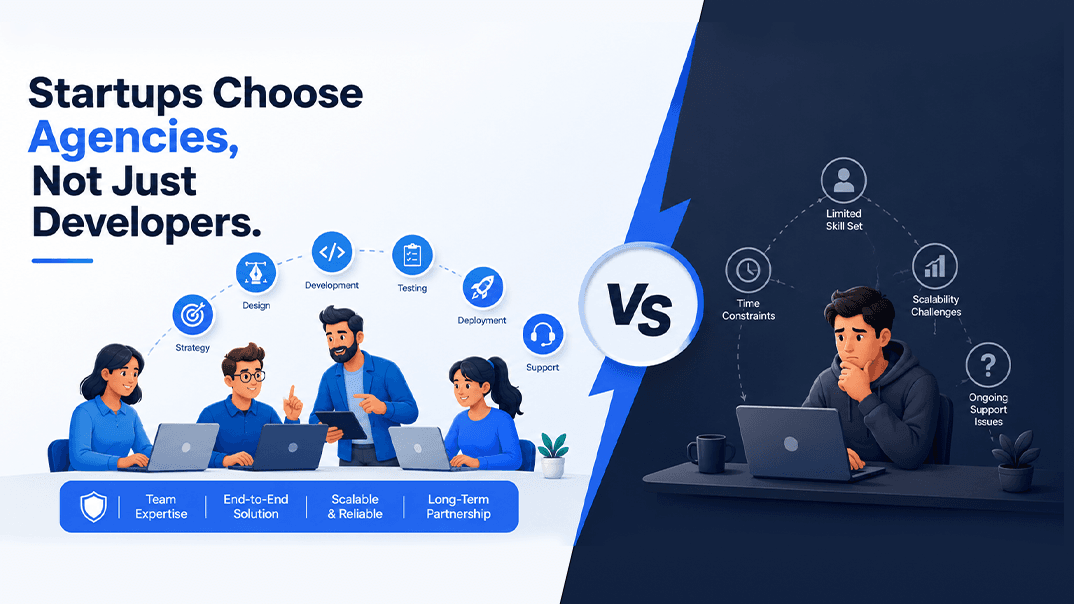
That’s why many companies today choose a professional app development agency instead of relying solely on freelancers.
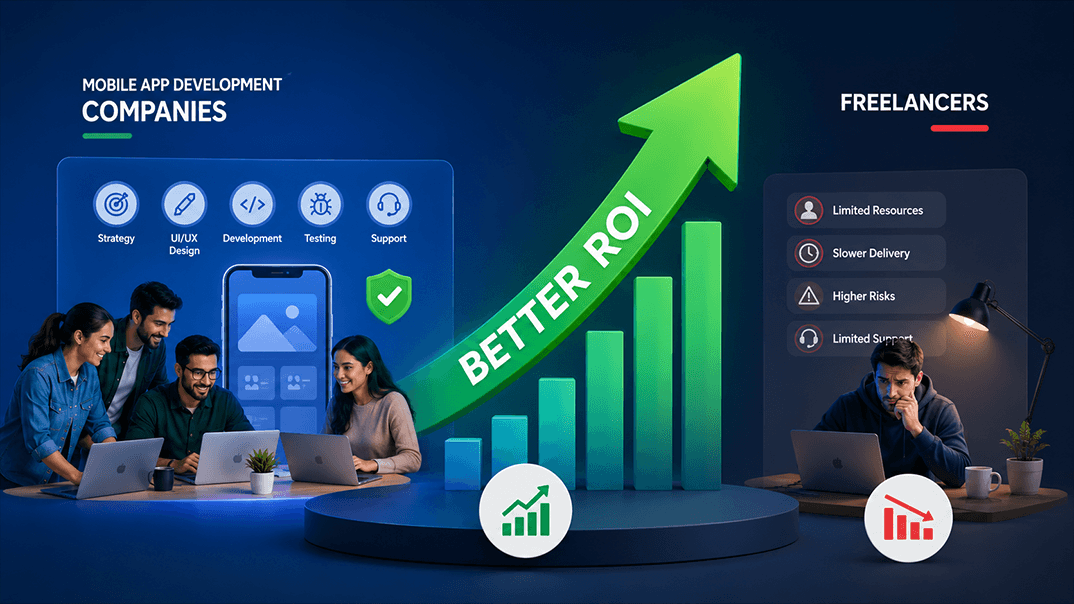
The discussion around mobile app development company vs freelancer has become increasingly relevant as businesses invest more heavily in digital products. While freelancers can be a good fit for certain projects, companies often prefer agencies for reliability, long-term support, and access to complete technical teams.
And honestly, when an app directly impacts revenue, customer experience, or brand reputation, businesses usually want a structured partner rather than depending on one individual handling everything alone.
In this article, we’ll break down why businesses prefer mobile app development companies, compare agencies with freelancers, and explain when each option makes sense.
Mobile App Development Company vs Freelancer: What’s the Difference?
At a basic level, both agencies and freelancers build apps. The real difference lies in the structure, expertise, and support behind the project.
A freelancer is typically an independent developer who manages projects individually. They may handle coding, communication, testing, and deployment themselves.
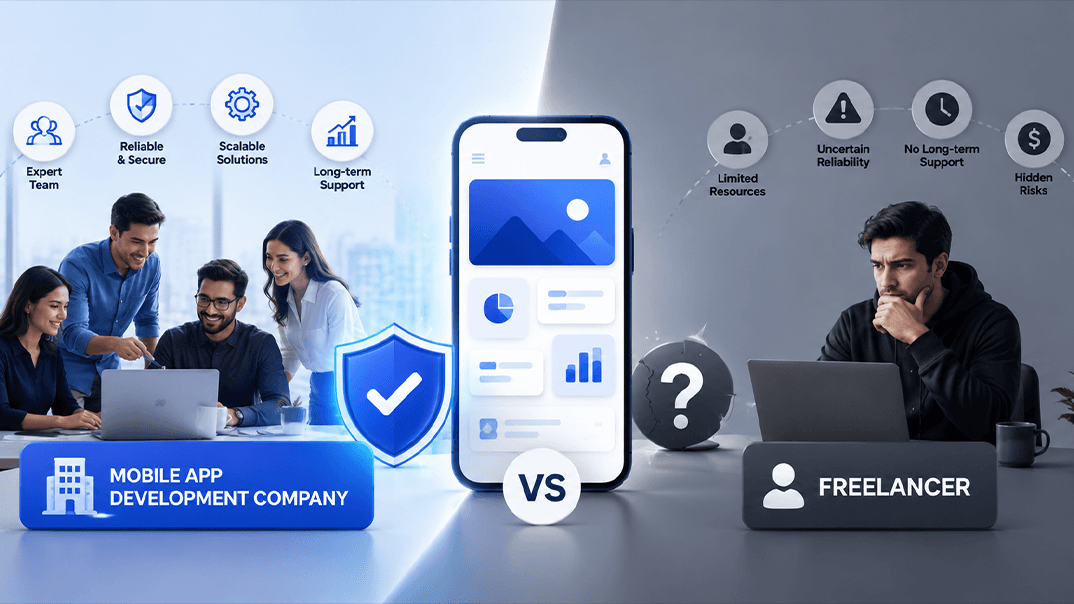
A mobile app development company, on the other hand, offers a team-based approach with specialists working together across different areas of the project.
Here’s a simple comparison.
| Feature | Freelancer | Mobile App Development Company |
| Team Size | One person | Multi-skilled team |
| UI/UX Design | Limited or Outsourced | Dedicated designers |
| Testing & QA | Basic testing | Structured QA process |
| Project Management | Self-managed | Dedicated project managers |
| Security Processes | Varied by individual | Standardized protocols |
| Scalability | Limited bandwidth | Easier resource scaling |
| Long-term Support | Depends on availability | Ongoing maintenance teams |
| Accountability | Individual responsibility | Contract-based reliability |
This difference becomes critical for businesses building customer-facing or enterprise-level applications.
1. Businesses Need More Than Coding
A successful mobile app requires fulfilling several aspects apart from writing clean code. Intuitive design, APIs, security protocols, and cloud-based infrastructure are such aspects. App development companies consider other aspects like performance optimization, QA testing, and regular updates, also.
Here is an example. UI designers work for smooth navigation, backend developers optimize databases, and QA teams ensure performance. These parallel workflows improve both speed and quality of the app.
Freelancers with high skills may end up in slow development or gaps in specialized areas.
2. Better Project Management and Communication
Inconsistencies in communication are one of the biggest issues during app development. Other factors like missed deadlines, unclear updates, and delayed responses affect the launch of an app.
App development companies handle these factors through dedicated project managers and real-time reporting systems. Sprint planning meetings and regular documentation help companies meet the app launching timeline.
Modern businesses rely on organized workflows and regular monitoring. This is better than casual, periodic updates.
This matters more than what people think, especially during the involvement of multiple stakeholders.
For example, a company launching a fintech or healthcare app cannot afford confusion during development cycles.
3. Faster Development Timelines
Time-to-market is a crucial business priority. It is because a delayed app launch may lead to missed sales opportunities and increased investor pressure. This can also increase the development costs and the chances of competitors gaining market share.
Development agencies enhance timelines as multiple specialists work together on the same project. One team handles backend development; another works on interface design and testing. Freelancers generally work sequentially, which naturally takes longer for complex projects.
This is one of the biggest app development agency benefits businesses mention after switching from freelance-based development.
Fast execution can save time and enhance profitability.
4. Stronger UI/UX Design Improves Customer Retention
Users expect rich mobile experiences. Even robust features of the app are not worthy if its interface looks confusing or outdated.
Professional app development companies house dedicated UI/UX specialists. These companies focus on user journey, accessibility standards, and navigation. Other factors are ensuring visual consistency and creating a conversion-focused design.
The expertise of developers in different domains results in more user engagement and retention.
Apps like Spotify or Uber became successful because of their seamless functionality and frictionless user experience. Good design quietly builds trust.
And bad design? Users notice immediately.
5. Long-Term Support and Maintenance
Launching an app is just the beginning. Businesses must focus on security updates, bug fixing, and enhancement of features during the process. Apart from this, OS compatibility updates and performance monitoring are crucial.
Reputable app development companies have dedicated support teams. These teams offer app maintenance services. These services help enterprises maintain performance.
Subscription apps, eCommerce platforms, and customer portals are some categories that require continuous support.
Freelancers may not always be available every time after launching an app. Without this technical assistance, even a small technical glitch can become an expensive hurdle.
6. Security and NDA Protection
Data privacy has become a major concern these days. Enterprise-grade mobile apps have customer information and confidential payment-related details. These apps also deal with login information and other confidential corporate data.
Application development agencies follow standard practices. Some of these practices are NDAs, secure development protocols, data encryption methods, and access control systems. Various compliance frameworks contribute to protecting data.
This protection is categorically essential for highly regulated industries. For example, healthcare, fintech, legal services, and eCommerce sectors need to meet these regulations.
7. Agencies Scale More Easily as Businesses Grow
Businesses cannot stay the same for long. A simple MVP of today needs to be evolved into a full-scale platform after six months. It is necessary to add new features, third-party integrations, and multiplatform support as per changing user demands. Advanced analytics and AI-driven functionality can take the app to a new level.
An agency can scale resources quickly. It can assign more developers, designers, or DevOps engineers as necessary to your app project.
Freelancers usually have limited bandwidth, which can slow expansion efforts for the app.
This scalability and flexibility compel businesses to hire app development company instead of freelancers.
8. Reliability and Accountability
Reliability matters when deadlines are set by keeping investors and customers in the loop.
Development agencies work through formal contracts, service agreements, and documented responsibilities. Businesses have all the information, including the contact person, deliverables, and escalation processes.
Freelancer arrangements can sometimes feel less predictable.
That doesn’t mean freelancers are unreliable by default - not at all. Many are highly professional. But agencies offer institutional stability that businesses often prefer for mission-critical projects.
Especially larger organizations.
Real Business Example: Why Companies Shift From Freelancers to Agencies
A common pattern appears in many growing businesses.
They initially hire freelancers to reduce costs. The setup works for small MVPs or prototypes.
Then growth happens.
More users join. Customer expectations change. Technical issues become more complex. Suddenly, the project requires:
- Better infrastructure
- Dedicated testing
- Ongoing monitoring
- Team coordination
- Faster feature deployment
At this stage, many businesses transition to agencies because they need operational depth rather than isolated development support.
This paradigm shift is common in SaaS, logistics, healthcare, and fintech products.
When a Freelancer Is a Good Choice
To be fair, freelancers are still valuable in certain situations. For example, when small app updates or basic prototypes in limited budgets are necessary, freelancers can be beneficial. They can handle one-time technical tasks and early app stages.
A small project with flexible timelines requires a freelancer. This option remains practical and cost-effective.
Many businesses successfully use freelancers for design tweaks, bug fixing, or lightweight applications.
When a Mobile App Development Company Is the Better Option
An agency becomes the stronger choice when your app deals with sensitive data and is capable to scale in the long term. When multiple specialists are necessary or you want to launch the app quickly, an agency can help you.
For customer-facing apps that directly impact growth, agencies often provide companies with a more secure and sustainable path.
Tips Before Hiring an App Development Partner
Businesses should evaluate development partners thoroughly before making a decision.
- Review Portfolio
Look for apps similar to your industry or project. Reviewing a portfolio can give useful details.
- Ask About Communication Methods
Clear updates and transparency matter just as much as technical skills. Focusing on communication is, therefore, beneficial.
- Understand Post-Launch Support
Maintenance plans should be discussed before development begins.
- Check Security Practices
Ask how user data and intellectual property are protected. This can help companies understand their secure practices.
- Evaluate Scalability
A good development partner should think beyond the initial version of the app.
Concluding Remarks
The selection between a mobile app development company and freelancer depends on various factors. Major ones are business goals, complexity, and long-term vision. Hiring freelancers can be a smart move for handling smaller projects with limited budgets. When businesses need scalability, security, structured communication, faster execution, and technical support, it is better to select agencies.
A professional app development company offers many resources. This includes developers and designers.
For businesses that want to build customer-facing applications, the decision to hire app development company teams is more about reducing risk for achieving sustainable growth.